

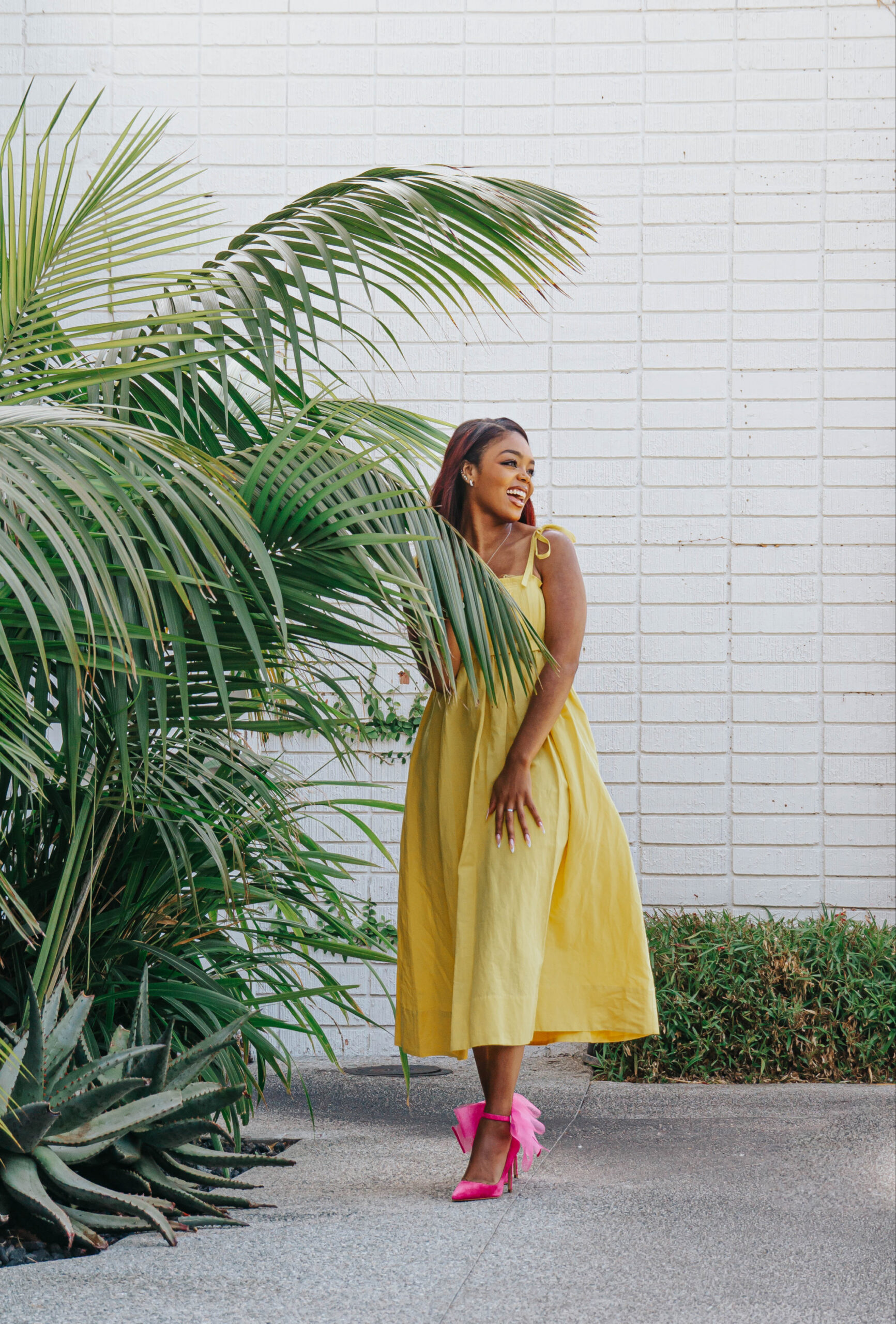


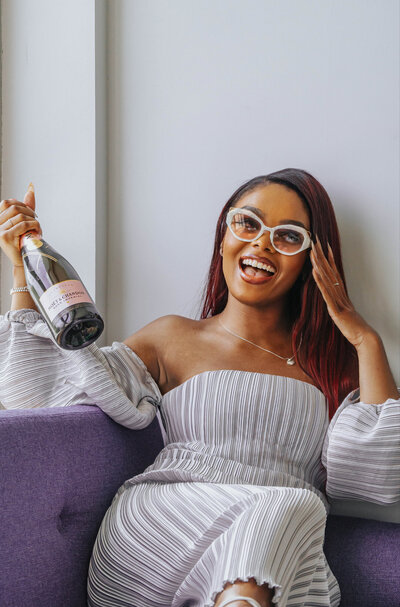
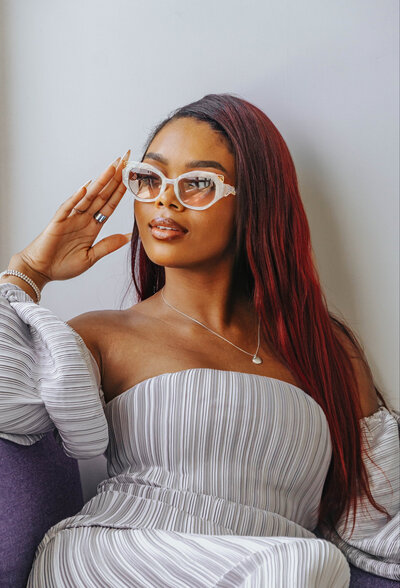
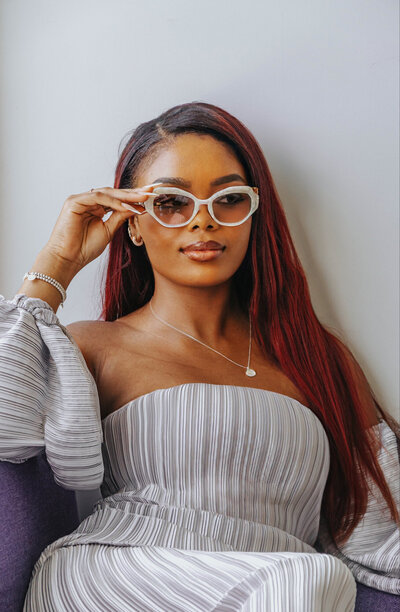
If I could identify one thing most of my clients struggle with, it’s…
Well, it’s something you might not expect.
Because the thing that most of my clients feel like they just can’t get right is something so simple that it might make you smile.
It’s color.
And color is a very real problem in women’s wardrobes because they stop and stare into their closets and overthink a very simple concept.
And that is the color wheel.
Are you one of these people?
Do you either,
- Already own a colorful wardrobe and have no idea how to combine pieces? (Y’know, in an interesting way…without looking chaotic.)
OR
- Have a closet dominated by neutrals and want to incorporate more color — but hesitate.
Here’s what I want you to know:
I want you to stop defaulting to black.
Or denim.
Or the same safe neutral combinations you probably pair over and over again.
And I want you instead, to follow a system.
Mine, to be exact.
Because color is not instinctual for most people.
But, it can be.
And all you need is a little bit of structure.
And once you understand this structure, color stops feeling chaotic — and starts feeling intentional.
Let’s get into it.
Why Color Feels So Hard
Color is emotional.
Period.
And that’s it. That’s the real secret.
And this is the part that most of us don’t learn.
Color = Light + Emotional Frequency.
And this means that each color carries it’s own energy.
And every energy carries it’s own frequency.
So here’s the thing that most people don’t realize: color isn’t just an extension of who you are; it’s also an extension of who you are being.
And this is what I mean by that….
To spare you the scientific and spiritual details and jargon, the gist of it is very simple: color will always communicate before you speak.
But the thing is, color doesn’t just communicate for you; it communicates with you.
Think about this:
Red carries presence.
Blue carries calm.
Green carries life.
Yellow carries confidence.
Cream carries softness.
Black carries everything.
So when you combine colors, you are layering messages.
Because color carries it’s own weight and its own presence. So, if you are wearing a color combination that feels off, it’s because your brain has registered the visual dissonance between the two frequencies.
Visual dissonance in your wardrobe creates hesitation.
And this is why so many women shy away from color.
Because if you carry mixed signals, you need to realize that one of two things might be the problem:
- That you have mixed colors together that don’t work energetically.
OR - That your energy is not in alignment with the colors you are wearing.
Think about this: Red is a color for a woman who wants to be seen and heard.
Is a little red dress too much for your aesthetic? Does a bold red lip make you feel powerful? Does it make you feel sexy?
Or does it make you feel uncomfortable?
Because the thing is, our energy carries weight, too. Even without our clothing, our posture and attitude are also speaking. And so if you want to incorporate color, ask yourself: are you dressing for the person you are currently being, or want to be?
There’s a difference.
And a lot of us come to confront this realization at a pivotal moment in their lives— a brand new chapter.
Are you in a state of transition at your job? Are you looking to feel and dress more powerfully? Are you getting married? Are you a mother in post-partum, or have you simply decided to give more of your own time to yourself?
Because here’s the style trick: I want you to wear more color.
But the thing is, I want you to be more intentional with the colors you wear.
Because color is about how you are presenting, yes, but it’s more so about who you are being.
So if you want to be more powerful, I want you to find more colors that carry the weight of power, you see? If you want to be more calm in your day, I want you to incorporate more calming colors into your wardrobe.
And this is why so many women struggle with the concept.
It isn’t because they don’t like color. It’s because they haven’t figured out which colors make them feel like the person they want to be.
And this is why I say this; because there are so many color combinations that make us feel like the woman we want to be, and there are so many color combinations that make us feel safe.
This is why we default to black.
Because black carries the frequency of every single color.
It isn’t because it’s slimming, although it is. It’s because every frequency of light is contained within the color, and this makes us feel safe. It carries the vibration of everything, and I want you to keep that in mind.
Because I want you to feel aligned.
I want you to feel sure.
But I also want you to step out of your comfort zone if you want to be someone new.
So I want you recognize that the colors you wear aren’t just carrying their own weight…you have to be prepared to hold them.
Let’s go deeper.
Your Foundation: The Color Wheel
Before we talk about your wardrobe, we need to talk about structure.
And “structure” means the good ol’ fashioned color wheel.
Which, I need you to know, is not just a necessity in an art class.
It is the framework for harmony in your closet.
And it’ll be the guide in this season of your becoming.
I mentioned before that color is emotional; that each carries an energetic frequency. But I need you to understand this one thing, too.
Color is light.
And light is electromagnetic radiation.
Electromagnetic radiation is, in short, energy.
Energy carries a frequency.
So you see what I did there?
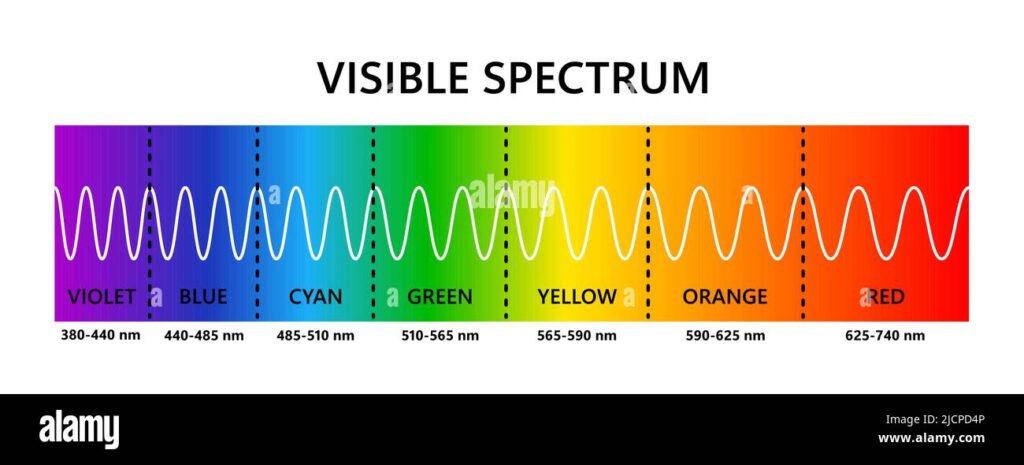
This is why each color carries an energetic frequency. Because when it comes to visibility and our wardrobes and the way our nervous systems react when we wear these colors, I want you to remember these two things:
- Short wavelengths = cooler colors (blue, violet)
- Long wavelengths = warmer colors (red, orange)
Shorter wavelengths calm the nervous system.
Longer wavelengths will physically stimulate us.
It’s neurology, and there are different electromagnetic frequencies carried across the spectrum of the color wheel.
Let’s used RED as an example.
Red is a “power” color.
Red commands attention faster than any other color and physically activates the viewer because it has the longest wavelength. It carries the energies of power, passion, and sexuality. Which makes complete sense, right? What is the typical “bold color” women wear on their lip?
(Spoiler: it’s red).
And while every color breaks down into its own energy, which I deep-dive with each of my clients individually in the Self-Image Style Intensive,
But here’s why this actually matters.
Color affects mood.
It affects perception.
It affects authority.
If you are building a personal brand, color repetition creates recognition. Color recognition signals to the viewer that the wearer carries the energetic vibration of the color. So, if you are stepping into leadership, color stability creates visual consistency and therefore relays a narrative.
That narrative is the basis of your personal brand.
If you want to feel more powerful, start by looking like it.
Color is not decoration.
It is an intentional tool you can use to manifest that next version of you.
The Emotional Block Around Color
But, see, I want you to know that if you avoid color, you aren’t alone.
Too many women have been told at some point:
“That’s too loud.”
“That’s too much.”
“That’s not slimming.”
So they have graciously and firmly retreated into black.
The dressed in what seemed “corporate appropriate.”
They wore the pencil skirts and the button ups.
But color is expansion.
And expansion requires permission.
If you want to feel more alive in your wardrobe, color is often the missing layer.
Not more clothes.
Better combinations.
So the Takeaway?
Color theory is not about being artistic.
It’s about being intentional.
When you understand the underlying emotional and energetic emotional frequencies behind the colors in your wardrobe, it becomes easier for you to get dressed.
Why?
Because you are literally selecting the energy you want to carry for the day.
The tricky part is making sure you, yourself, stay in alignment with that energy.
And once you understand the structure, you can play.
And if you’re ready to move beyond surface-level tips, my Self-Image Style Intensive is where we uncover your personal style blocks and realign your wardrobe in just 90 minutes.
Not trends.
Not rules.
Just good ol’ fashioned alignment.
Save this post first.
Then decide if you’re ready to do the deeper work.
I’m here when you’re ready.
— Tahirah